
The Babcock Ranch lifestyle is chugging cheap energy from solar panels, navigating 18k acres of sustainability in clean energy golf carts and building community toward the endgame of 19.5k total homes, mostly new construction. The community is roughly 15 miles east of Fort Myers and 25 minutes from Punta Gorda Airport. It runs on a 700-megawatt solar field built by Florida Power & Light (FPL). When Hurricane Ian hit as a Category 4 storm in September 2022, Babcock Ranch stayed dry and kept the lights on. It is not a 55+ community. It is not a gated resort. It is a real town with schools, shops, medical offices and miles of trails, built for families, remote workers, retirees and snowbirds alike. This page walks you through what living here actually looks like, neighborhood by neighborhood and hour by hour.
Free. We never charge our customers a commission.
What Babcock Ranch Is
Babcock Ranch is a master-planned community on the Charlotte-Lee county line in Southwest Florida. Kitson & Partners developed it and opened the first homes to residents in 2018. The developed community covers about 5,000 acres. Surrounding it is the 73,000-acre Babcock Ranch Preserve, a former cattle ranch now managed by the state of Florida.
The town is not gated. There are no guard shacks. You drive in, park and walk around like any other 'burb. That is by design.
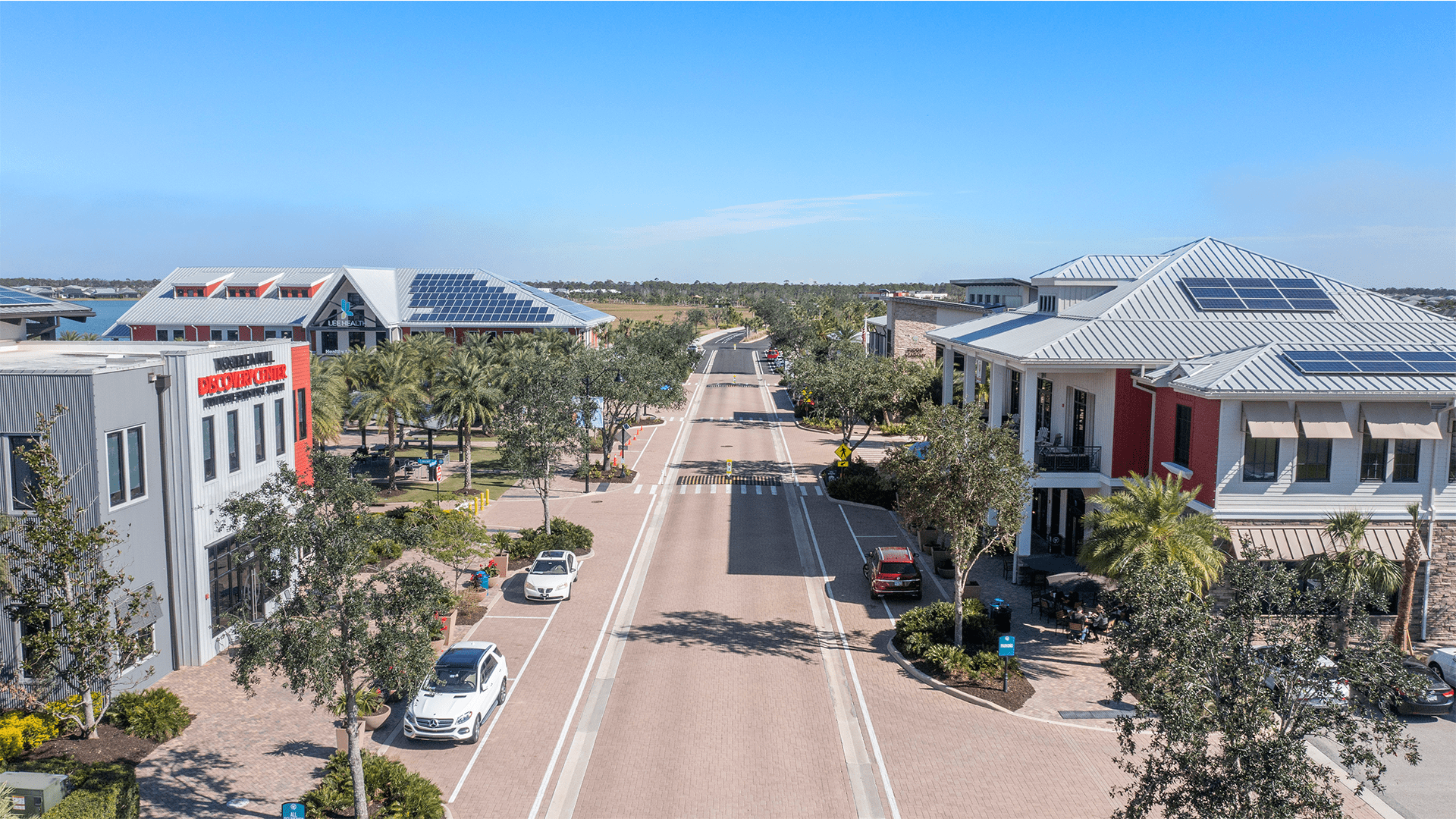
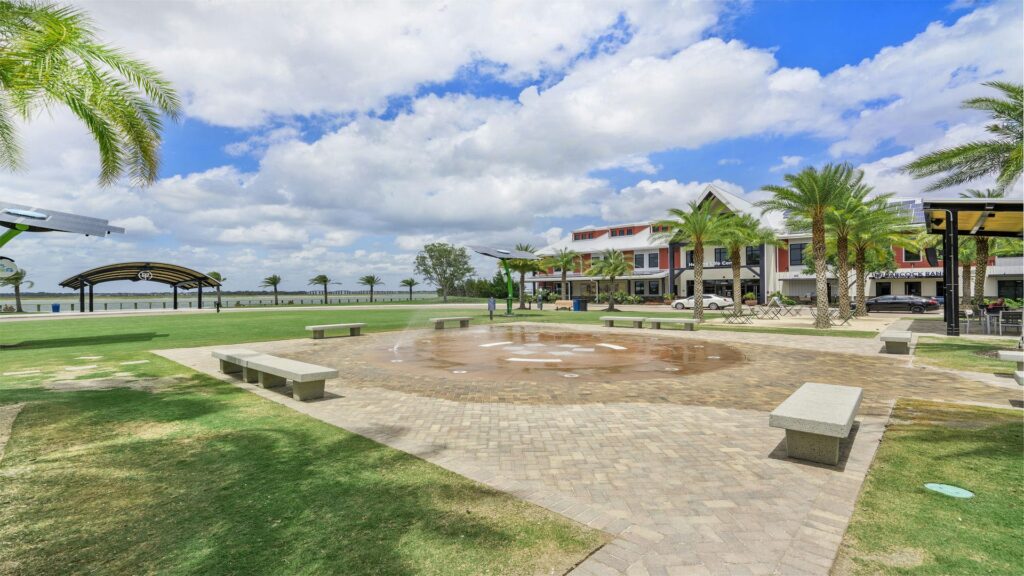
Founder's Square is the nucleus of The Ranch. Think of it as the town square, a cluster of restaurants, shops and a weekly farmer's market surrounded by a lake boardwalk. From there, the residential neighborhoods fan out in every direction.
Several builders work inside Babcock Ranch, including Pulte Homes, Lennar and D.R. Horton. New construction goes from the mid-$200s to well over $1,000,000 and a new section called Live Oaks will be opening at $1.5m and up, depending on the neighborhood and floor plan. The community is still growing. Construction is underway on B Street, a collection of retail, commercial and residential space across from Founder's Square in WestTown. Construction is planned for the new 140,000 square feet MidTown Marketplace shopping center.
This is not a retirement community. The age range is genuinely wide, young families live next to 70-year-old snowbirds who live next to remote workers in their 30s. The design of the town, walkable streets, a school inside the community and nature access from your backyard, works for all residents.
- First residents moved in
- 2018
- Acres in the developed community
- 5,000
- Acres of preserve next door
- 73,000
- Homes at full build-out
- 19,500
A Typical Day in The Ranch
Here is what a Tuesday in Babcock Ranch actually looks like.
- Early morning. You wake up and walk or ride your golf cart to Slater's Goods & Provisions in Founders Square for coffee. Or Starbucks at the Crescent B Commons shopping center. No car needed. The streets have dedicated bike lanes and the whole community is designed around getting places without driving. School drop-off at Babcock Neighborhood Schools takes five minutes, it is inside the community. Then you're back at your desk by 8:30. The internet is fast. Most residents use an up to 1 Gbps fiber-optic network operated by Quantum Fiber.
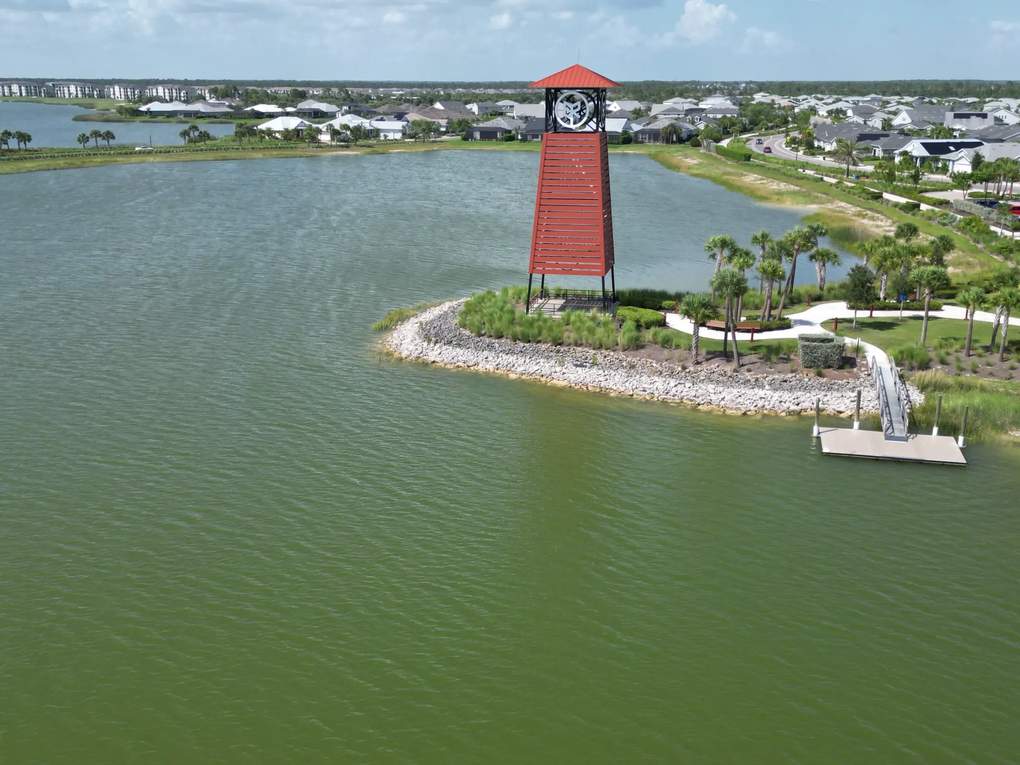
- Mid-morning. You might take a lap on the Lake Babcock trail. The 1.2-mile loop around the lake is flat, paved and lined with native plants. You'll see egrets. You might see an alligator on the bank. Runners and dog-walkers are out all morning.
- Lunch. Lunch is at The Lakehouse at Founder's Square or any of the myriad nearby restaurants like Pi Local or Oar & Iron. On Sunday mornings, there is a farmer's market in Founder's Square where local vendors sell produce, honey, plants and food trucks keep you fed.
- Afternoon. Kids get out of school and head straight to the multiple community parks like the new Pkwy along Babcock Trail Road in MidTown. Paddle-boarders and kayakers are out on Lake Babcock by 3 p.m. Babcock Wilderness Adventures runs eco-tours, swamp buggy and airboat rides into the preserve, for residents and visitors alike.
- Evening. Founders Square picks up again. Food trucks set up a few nights a week. On Friday and Saturday nights, food trucks gather in Founder's Square. People bring chairs and build community on the greens while listening to live music. The lights along the streets come on without any overhead power lines in sight, all of Babcock Ranch's utilities run underground.
The Solar-Powered Story
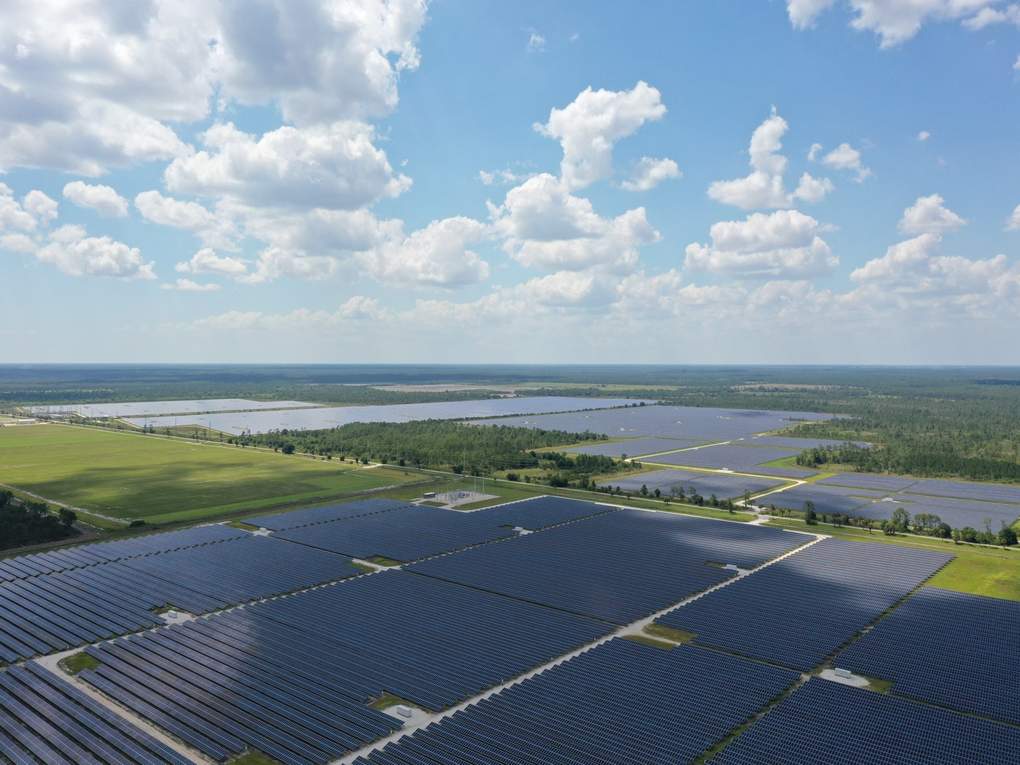
Babcock Ranch is the first solar-powered town in the United States. That claim has a specific meaning. FPL built a 700-megawatt solar field just north of the community. That field feeds electricity into the grid before the community draws from it. Over a full year, the solar field generates more power than the town uses. Not every home has rooftop panels, most don't, but every home draws from a grid that runs on solar.
Residents who want to go further can add rooftop panels on top of that.
When buyers ask me about the solar setup, they usually expect it to be complicated. It's not. You plug in like anywhere else. The difference is where the power comes from. For a lot of people moving here from a place where the grid goes down every hurricane season, that matters more than almost anything else.
How The Ranch Survived Hurricane Ian
Hurricane Ian made landfall near Fort Myers Beach on September 28, 2022, as a Category 4 storm with sustained winds around 150 mph. It was one of the deadliest and most destructive storms in Florida's history.
Babcock Ranch did not flood. It did not lose power.
The reasons are structural. The community sits about 30 feet above sea level, well above any storm surge risk from a storm making landfall at the coast. Underground power lines meant no poles to knock down. The stormwater system is engineered into the lakes; heavy rain drains into them rather than into streets and homes. Construction standards throughout the community are built to Florida's current hurricane codes.
Residents who didn't evacuate rode out the storm at home. Babcock Ranch also hosted hundreds of evacuees from harder-hit coastal communities in the days after the storm.
I've had clients who lost their homes on the coast during Ian. When they came to me afterward and said they wanted something that wasn't going to do that again, Babcock Ranch was at the top of the list. Not because it's a guarantee, nothing is, but because the engineering is honest about what it's trying to do.
Real talk here: Babcock Ranch is hurricane-resilient, not hurricane-proof. No community in Florida is hurricane-proof. A storm tracking differently or at a higher intensity could produce different results. What Ian showed is that the design works under severe conditions. That matters.
Nature, Trails & the Preserve Next Door
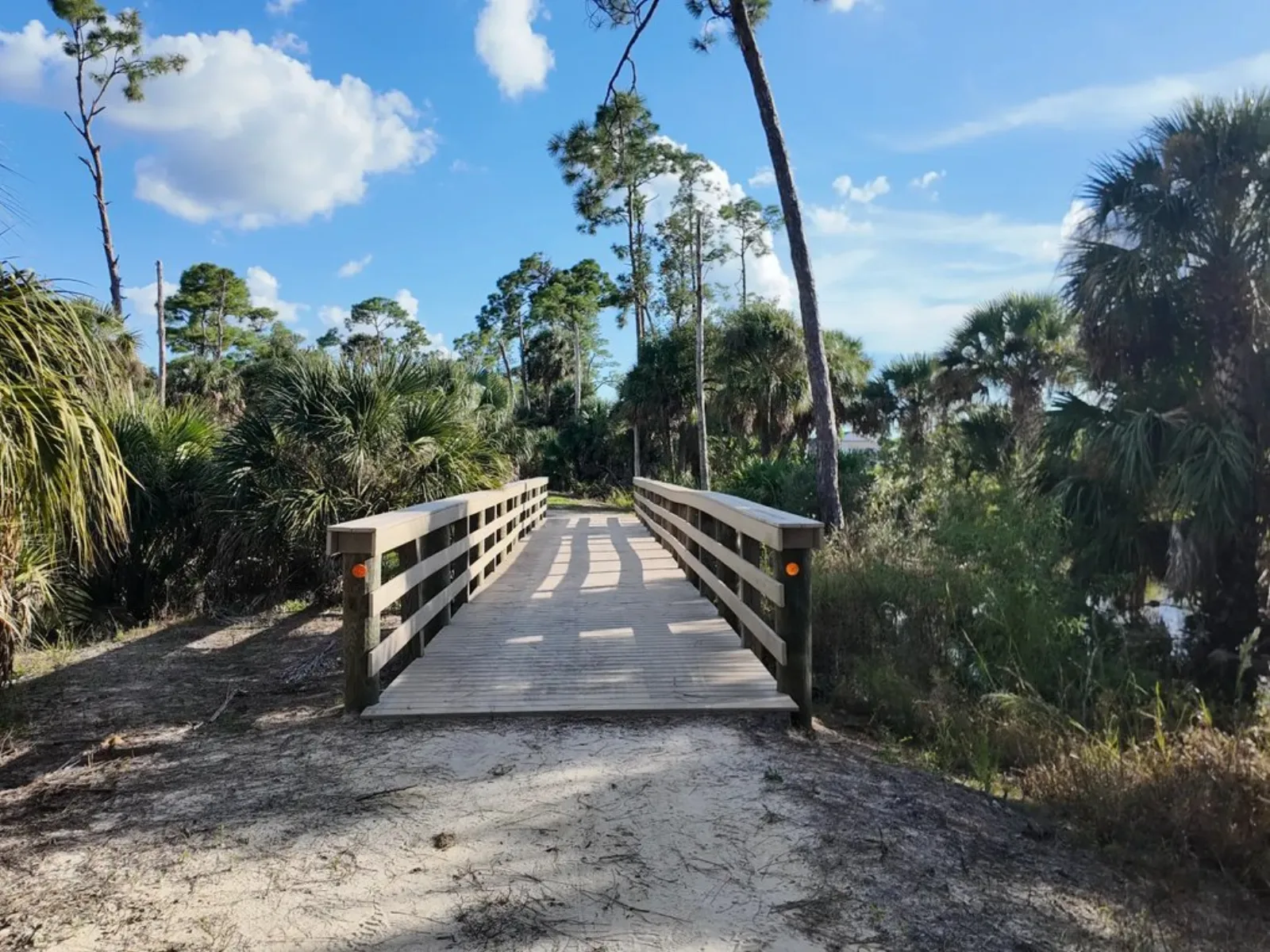
The 73,000-acre Babcock Ranch Preserve borders the community directly. This is not a park that exists on a map. You can walk into it. The preserve is a former cattle ranch that Babcock Florida Company sold to the state in 2006 as one of the largest conservation land purchases in Florida history.
Wildlife sightings inside and around the community are common: alligators, bald eagles, sandhill cranes, white-tailed deer, otters and Florida gopher tortoises. Florida panther tracks have been documented in the preserve.
Babcock Wilderness Adventures runs swamp buggy and airboat tours into the preserve for residents and visitors. Tours go out daily and cover thousands of acres of scrub, wetland and old-growth forest.
Inside the developed community, the trail network connects every neighborhood. The Lake Babcock boardwalk gives you a view of the lake from the water's edge. The Founders Trail loops further out. Biking, walking and running are genuinely how people get around here. If you need four wheels, it's a golf cart, not a car.
Nature was not added as an afterthought at Babcock Ranch. It was the starting point. The community was designed around conservation first and development second. That shows in how the land sits.
Who Lives in The Ranch
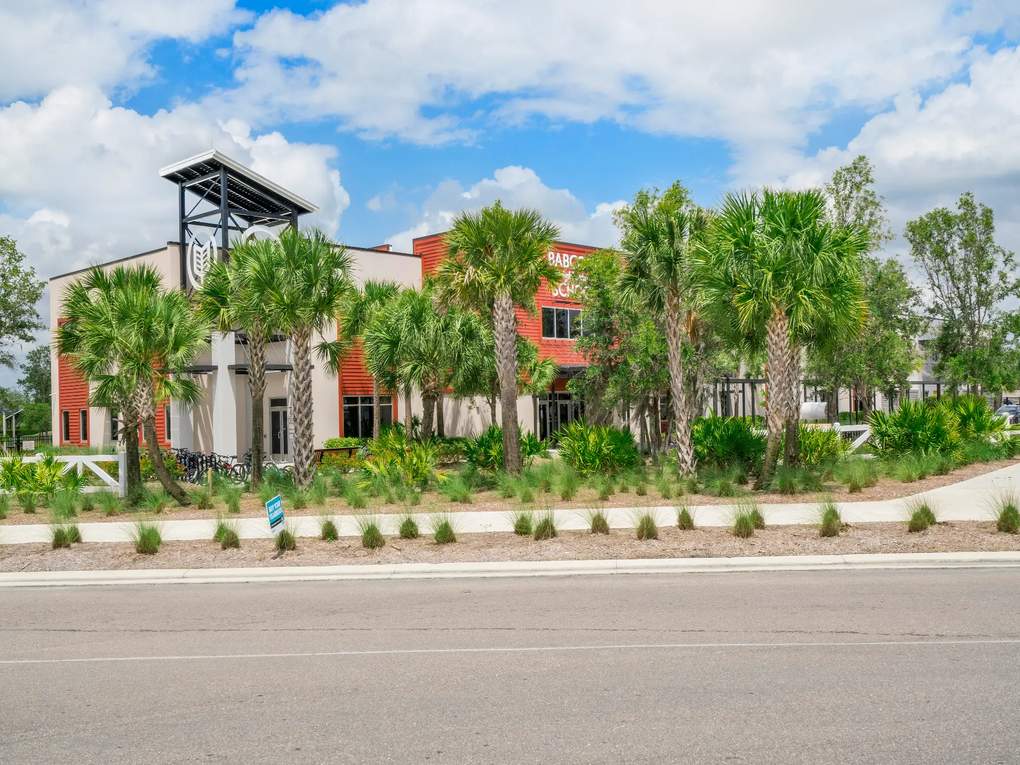
Families with school-age children
Make up a significant share of buyers. Babcock Neighborhood Schools, a K–12 charter school with a focus on project-based learning, sits inside the community. Kids can walk or ride scooters to school. The streets are designed for it.
Snowbirds
The other major group. November through April, seasonal residents from the Midwest and Northeast fill in. The mild winters, outdoor access and walkable town center are the draw. Some own, some rent for the season.
Remote workers
Have found a strong foothold here, too. Fast internet, quiet streets and coffee shops that don't feel like airport lounges make it a real option for people who can work from anywhere. The question "why not somewhere cheaper?" has a real answer: the quality of what surrounds you during the day.
Retirees and empty-nesters
Drawn by the same things as everyone else, nature access, a genuine community vibe and a town that doesn't require a car for every errand. They are not in a separate section of the development. They live next door to the families with kids, which is the point.